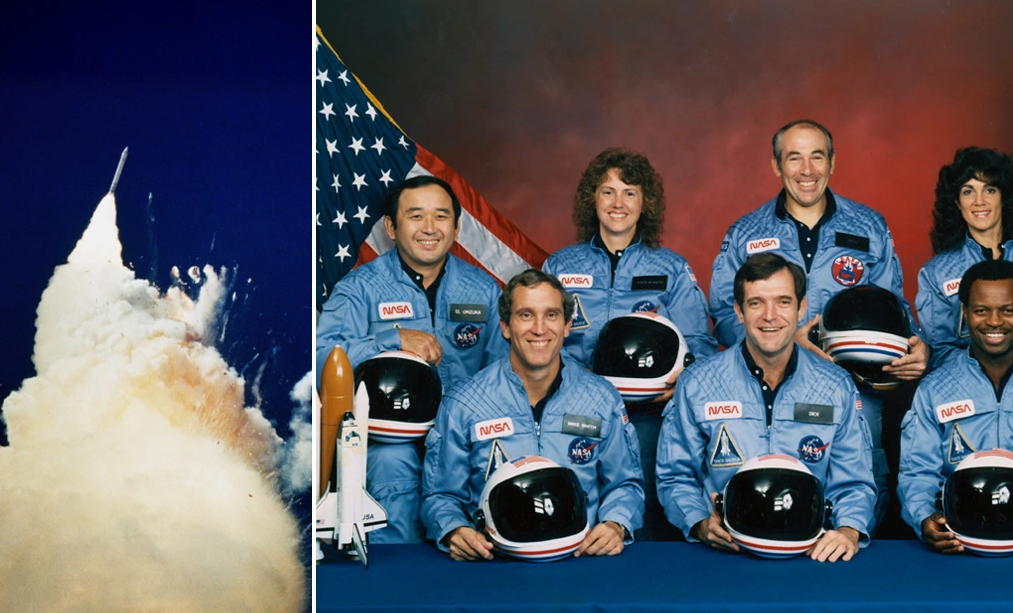
Στις 28 Ιανουαρίου του 1986 λίγο μετά τις δέκα το πρωί, οι «τυχεροί» που είχαν αποκτήσει πρόσβαση σε ειδικό χώρο του διαστημικού κέντρου Κέννεντι άρχισαν να καταφτάνουν.
Την ίδια περίπου ώρα, το επταμελές πλήρωμα του Challenger ετοιμαζόταν για να μεταβεί στο διαστημικό λεωφορείο, που θα εκτοξευόταν λίγα λεπτά μετά τις έντεκα και μισή, για ένα ταξίδι που ήδη είχε αναβληθεί τρεις φορές τις τελευταίες μέρες.
Κάτι που λίγο απασχολούσε την 37χρονη Κρίστι Μακόλιφ, μια καθηγήτρια Γυμνασίου στο Κόνκορντ του Νιου Χαμσάϊρ που είχε επιλεγεί μεταξύ 11.000 εκπαιδευτικών στον διαγωνισμό για την συμμετοχή ενός απλού Αμερικανού πολίτη σε διαστημικό ταξίδι.
H συγκλονιστική live μετάδοση από την εκτόξευση του Challenger:
Τον διαγωνισμό είχε προκηρύξει η κυβέρνηση του Ρόναλντ Ρέιγκαν, με κύριο σκοπό να πουσάρει την δημόσια εικόνα της NASA και η Μακόλιφ αφού ολοκλήρωσε την απαιτούμενη βασική εκπαίδευση προκειμένου να αντέξει το ταξίδι, συμπλήρωσε την επταμελή ομάδα.
Μαζί της θα πέταγαν ο Μάικλ Σμιθ, ο Φράνσις Σκόμπι που ορίστηκε διοικητής του Challenger, η Τζούντιθ Ρέσνικ, ο Ρόναλντ ΜακΝάιαρ, Ο Γκρεγκ Τζάρβις και ο Έλισον Ονιζούκα.
Όλοι τους μπήκαν στο mini bus με το logo της NASA χαμογελαστοί εκείνη την καταραμένη όπως αποδείχτηκε Τρίτη, που το ταξίδι τους στο διάστημα αλλά και σε αυτή την ζωή έμελλε να διαρκέσει μόλις λίγα δραματικά και αγωνιώδη λεπτά.
Θάνατος σε ζωντανή σύνδεση
Λίγο μετά τις έντεκα και μισή όλα πλέον ήταν έτοιμα για την εκτόξευση του Challenger και η αντίστροφη μέτρηση ξεκίνησε στις 11.39 π.μ. μέσα σε ένα κλίμα ευφορίας.
Συγγενείς, φίλοι και κόσμος παρακολουθούν την άνοδο του διαστημικού λεωφορείου, ενώ εκατομμύρια τηλεθεατές βλέπουν το γεγονός χάρη στην ζωντανή κάλυψη από το CNN.
Στο πρώτο μισό λεπτό όλα δείχνουν να βαίνουν καλώς αφού το Challenger ανεβαίνει μέσα σε ένα πυκνό σύννεφο καπνών και υδρατμών αλλά και μιας «τουλίπας» ύποπτου γκρίζου καπνού που διαχέεται από τον δεξιό σταθερό προωθητικό πύραυλο.
Κανείς στο κέντρο ελέγχου δεν την αντιλαμβάνεται και βετεράνος αστροναύτης Ρίτσαρντ Κόρβι που κάθεται στην κονσόλα επικοινωνίας με το διαστημικό λεωφορείο λέει στον κυβερνήτη: «Δώσε την μέγιστη ισχύ στους κινητήρες σου».
Οι λέξεις που βγαίνουν από το στόμα του Φράνσις Σκόμπι έμελλε να είναι και οι τελευταίες που έφτασαν στο κέντρο ελέγχου: «Ελήφθη, βάζω μέγιστη ισχύ».
Είχε περάσει ένα λεπτό και δεκατρία δευτερόλεπτα μια πύρινη λευκή σφαίρα φωτιάς διακρίνεται στον ουρανό σε ύψος 15.000 μέτρων ενώ οι δύο πύραυλοι ταξιδεύουν με μια τρελή πορεία.
Ο Στιβ Νέσμπιτ, υπεύθυνος δημοσίων σχέσεων της NASA δεν αντιλαμβάνεται ότι το Challenger έχει χαθεί και χάνει τα λόγια του για ένα-δυο λεπτά.
Όταν επανέρχεται λέει αρχικά ότι μάλλον προέκυψε μια σοβαρή δυσλειτουργία και λίγα δευτερόλεπτα αργότερα ανακοινώνει ότι ο αξιωματικός πτήσης ανέφερε ότι το διαστημικό λεωφορείο εξερράγη.
Η αλήθεια που θα αποκαλυφθεί αργότερα ήταν ακόμη πιο τρομακτική.
Δεν πέθαναν στην έκρηξη
Εκτός από τους συγγενείς και φίλους των επτά αστροναυτών που είδαν το φοβερό ατύχημα από το Κέννεντι, εκατομμύρια τηλεθεατών το παρακολούθησαν στις τηλεοράσεις τους, αφού το CNN μετέδιδε ζωντανά την εκτόξευση.
Από τις έρευνες που διεξήχθησαν προέκυψε ότι οι επτά δεν πέθαναν κατά την έκρηξη, κάτι που επιβεβαιώθηκε και από το βίντεο που κατέγραψε το γεγονός, στο οποίο διακρίνεται ο θάλαμος του πληρώματος να έχει αποσπαστεί ακέραιος.
Εν συνεχεία εκτινάχθηκε στον αέρα και κατέπεσε μετά από 185 δευτερόλεπτα στην θάλασσα, λίγα χιλιόμετρα πιο μακριά από τις ακτές της Φλόριντα.
Η στιγμή της καταστροφής
Οι ειδικοί συμφώνησαν ότι κατά την διάρκεια της δραματικής πτώσης με ταχύτητα 500 χιλιομέτρων την ώρα το πλήρωμα ήταν κατά πάσα πιθανότητα λιπόθυμο.
Δεν έζησαν δηλαδή την αγωνία πριν από την βίαιη πρόσκρουση του θαλαμίσκου στον ωκεανό και την βύθισή του σε βάθος δεκάδων μέτρων, στο πιο άτυχο διαστημικό ταξίδι που επιχείρησε η NASA.
Η μοιραία αποκόλληση
Ο πρόεδρος Ρόναλντ Ρέιγκαν συνέστησε άμεσα την επιτροπή Ρότζερς προκειμένου να διερευνηθούν τα αίτια της καταστροφής του Challenger, στην οποία συμμετείχαν μεταξύ άλλων οι πρώην αστροναύτες Νιλ Άρμστρονγκ και Σάλι Ράιντ.
Οι αριθμοί αποδεικνύουν και το βάθος της έρευνας αφού εξετάστηκαν πάνω από 160 άτομα, έγιναν πάνω από 35 συνεδριάσεις, προέκυψαν 12.000 ώρες απομαγνητοφωνήσεων, ενώ μελετήθηκαν 122.000 σελίδες και εκατοντάδες φωτογραφίες.
Η αιτία του κακού ήταν μια αποκόλληση σε έναν από τους δακτυλίους σφραγίσματος στους αγωγούς στερεών καυσίμων η οποία προκάλεσε ρήγμα στον δεξιό πύραυλο καυσίμων και διαρροή θερμού αερίου από το εσωτερικό του κινητήρα με φοβερή πίεση.
Ακολούθησαν αλυσιδωτές αντιδράσεις, όπως η υπερθέρμανση της δεξαμενής καυσίμων και η έκρηξη τους που οδήγησαν στην καταστροφή του Challenger και σε μια από τις μεγαλύτερες διαστημικές τραγωδίες του 20ου αιώνα.
Challenger: The 73 Seconds of Tragedy That Froze the World (vids)
On January 28, 1986, just after ten in the morning, those fortunate enough to have access to a special area of the Kennedy Space Center began to arrive. Around the same time, the seven-member crew of the Challenger was preparing to board the space shuttle, which was scheduled to launch shortly after eleven-thirty, for a journey that had already been postponed three times in recent days. Something that concerned the 37-year-old Christa McAuliffe, a high school teacher from Concord, New Hampshire, who had been selected among 11,000 educators in a competition to participate in a space journey. The shocking live broadcast of the Challenger's launch: The competition had been launched by the Ronald Reagan administration, primarily to boost the public image of NASA, and McAuliffe, after completing the required basic training to withstand the journey, completed the seven-member team. They all boarded a minibus with the NASA logo, smiling, on that fateful Tuesday, when their journey into space and into life was destined to last only a few dramatic and agonizing seconds. Death in live connection Shortly after eleven-thirty, everything was ready for the launch of the Challenger, and the countdown began at 11:39 a.m. in an atmosphere of euphoria. Relatives, friends, and the public watched the ascent of the space shuttle, while millions of viewers saw the event thanks to the live coverage from CNN. In the first half minute, everything seemed to be going well as the Challenger rose amidst a dense cloud of smoke and vapor, and a suspicious gray smoke plume emanating from the right solid rocket booster. No one in mission control noticed it, and veteran astronaut Richard Covey, sitting at the communication console with the space shuttle, told the commander: "Give me maximum thrust." The words that came from Francis Scobee's mouth were destined to be the last to reach mission control: "Roger, putting maximum thrust." After one minute and thirteen seconds, a fiery white ball of fire was seen in the sky at an altitude of 15,000 meters, while the two rockets traveled at a mad pace. Steve Nesbitt, NASA's public affairs officer, did not realize that the Challenger had been lost and lost his words for a minute or two. When he recovered, he initially said that a serious malfunction had probably occurred, and a few seconds later announced that the flight officer had reported that the space shuttle had exploded. The truth that would be revealed later was even more terrifying. They didn't die in the explosion In addition to the relatives and friends of the seven astronauts who witnessed the terrible accident from…
Similar Articles

Challenger: Τα 73 δευτερόλεπτα της τραγωδίας που «πάγωσαν» την υφήλιο
Jan 28
You Might Also Like
ΦΩΤΟ: Καταγγελίες για σκουπίδια μετά τον Μαραθώνιο- Καθαρίστηκαν στη συνέχεια
Jan 18
Τραγωδία στη Βιολάντα: Θρήνος για την Βασιλική, την Έλενα, η Σταυρούλα
Jan 26

The Αrt of the Smart Deal - Ακίνητα σε Προνομιακές Τιμές από την Gordian
Jan 26

Βιολάντα: Επέλεξαν τη νυχτερινή βάρδια για τα παιδιά τους-Η στιγμή της έκρηξης
Jan 27
Challenger: Τα 73 δευτερόλεπτα της τραγωδίας που «πάγωσαν» την υφήλιο
Jan 28