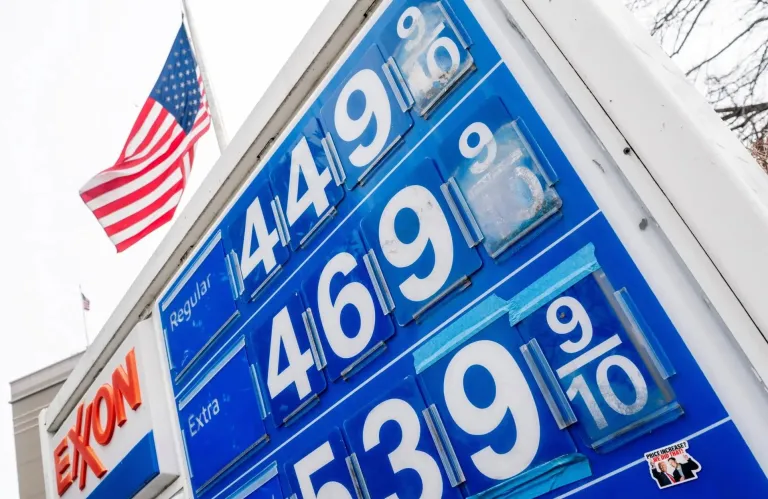
Άλμα πέραν του 5% πραγματοποιούν οι τιμές του αργού πετρελαίου με το Μπρεντ να αγγίζει τα 108 δολάρια το βαρέλι, καθώς μειώθηκαν οι ελπίδες για γρήγορο τερματισμό του πολέμου στην Μέση Ανατολή μετά την απόρριψη από το Ιράν διεξαγωγής συνομιλιών με τις ΗΠΑ.
Το Μπρεντ ενισχυόταν αργά το απόγευμα κατά 5,6%, στα 107,96 δολάρια το βαρέλι αφού προηγουμένως ανήλθε μέχρι και τα 108,8 δολάρια το βαρέλι.
Το αμερικανικό αργό πετρέλαιο, WTI, ενισχύεται την ίδια ώρα κατά 5,07%, στα 94,91 δολάρια το βαρέλι.
Η άνοδος των τιμών πετρελαίου οδηγεί σε πτώση την Γουόλ Στριτ με τον Dow Jones να υποχωρεί κατά 0,86%, τον S&P κατά 1,25% και τον Nasdaq κατά 1,69%.
Με σημαντική πτώση ολοκλήρωσαν τις συναλλαγές της Πέμπτης και οι ευρωπαϊκές χρηματιστηριακές αγορές.
Dialogos
Oil Prices Surge Over 5%, Brent Hits $108 Amidst Middle East Tensions

Oil prices have surged by over 5%, with Brent reaching $108 a barrel, due to diminishing hopes for a swift end to the conflict in the Middle East following Iran's rejection of talks with the US. Brent rose by 5.6% to $107.96 a barrel, while US crude oil (WTI) increased by 5.07% to $94.91. This increase negatively impacted stock markets, with declines in the Dow Jones, S&P, and Nasdaq indices. European markets also closed Thursday's trading with significant losses. The rise in oil prices is raising concerns about inflation and global economic growth. Uncertainty surrounding the geopolitical situation in the Middle East and oil supply continues to put pressure on prices. This situation is forcing governments to seek ways to mitigate the impact of rising fuel prices. Poland has announced measures such as reducing fuel taxes, setting a price cap at the pump, and potentially imposing a windfall tax on energy companies. Similar measures are being considered in other European countries, such as Romania and Hungary, to protect consumers from price increases. The rise in oil prices is a significant economic and political issue, with potential implications for the global economy and stability.